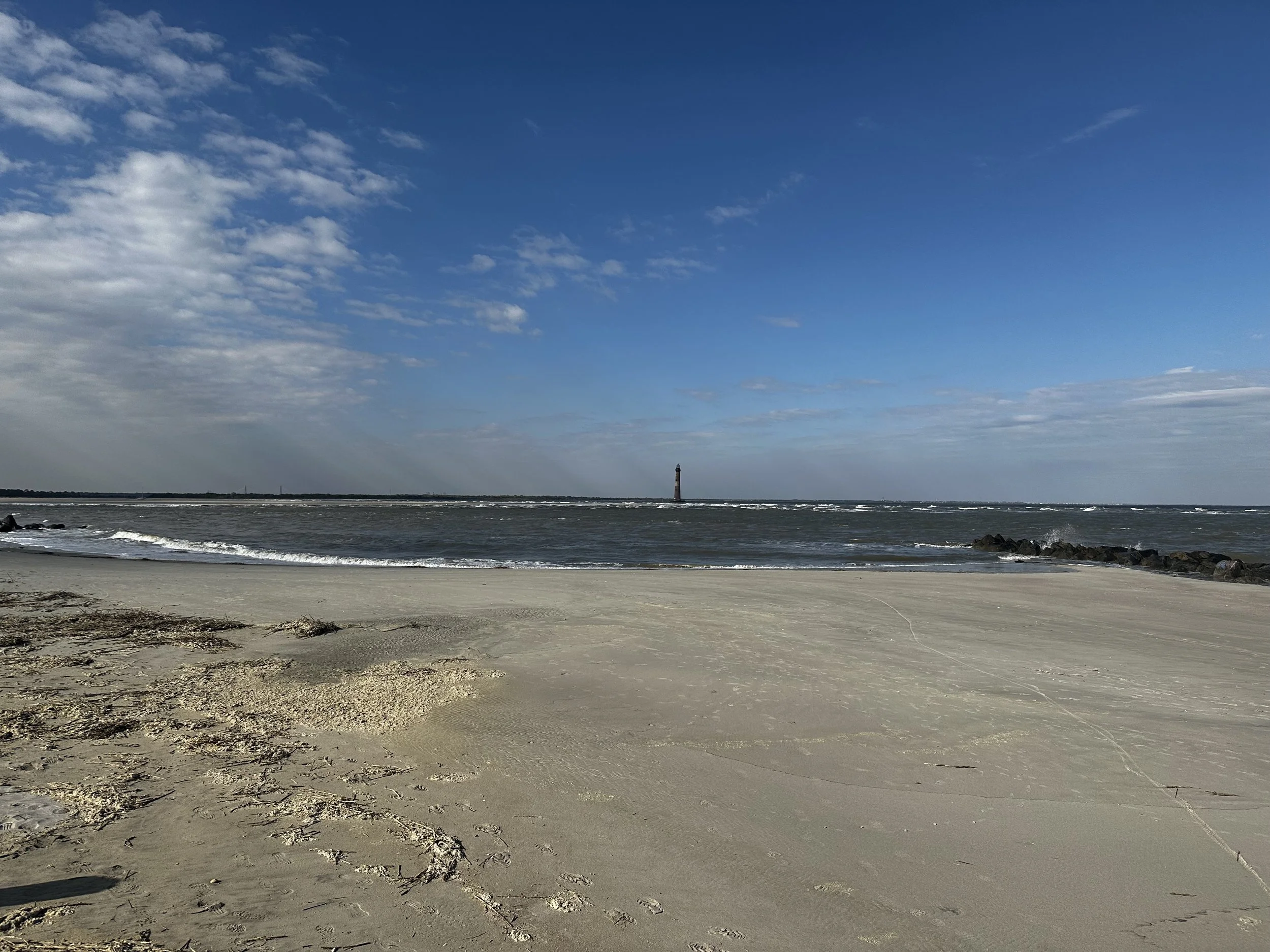
Taking a moment to breathe, reflect, and let the light guide what’s next.
Every March, our Leaders of Today team takes a full month off.
No meetings. No emails. No pressure.
It always feels a little strange at first — like the world should stop spinning without us. But it doesn’t. And that’s exactly the point.
For most of my life, I thought rest was something you earned after finishing everything on your list. The problem? The list never ends. There’s always one more thing to do, one more email to send, one more idea to chase.
Then my wife, Sadie, helped me see that rest isn’t something you earn — it’s something you’re designed for. She loves when we spend time together with no phones, no plans, and no “just one more email.” It wasn’t easy for me at first. Slowing down felt wrong, like I was letting something slip. But over time, I realized that my constant motion wasn’t always progress — sometimes it was just movement.
We started taking one full day each week to stop, breathe, and be fully present. I felt something shift. I became sharper, more creative, more alive. I wasn’t running on fumes anymore. And maybe the best part? I liked Sadie more (and she probably liked me more too).
Rest became our reset — not the finish line after the work was done, but the foundation that made all the other work possible.
God’s Rhythm, Not Ours
Even God rested.
He built that rhythm into creation — day and night, work and rest, create and celebrate. The Sabbath isn’t a command meant to slow us down for punishment; it’s an invitation to live in sync with how the world was designed to run.
When we never stop, we eventually forget why we’re even running.
Rest helps us remember. It reminds us who we are (loved, not just useful), who God is (provider, not taskmaster), and what really matters (people, purpose, presence).
The Sabbath is less about stopping work and more about starting trust. It’s our way of saying, “God, I believe You’ll take care of what I leave unfinished.”
The Science Behind Rest
Rest isn’t just a faith principle — it’s a human one.
Modern research continues to prove that rest is essential to how our brains and bodies function.
A study from the National Institutes of Health found that short breaks actually help the brain “replay” and strengthen memories — almost like pressing the save button on new information.¹
Researchers at UC Berkeley discovered that people who intentionally build rest into their weeks produce more creative, higher-quality work.²
And a 2024 study from Rice University revealed that during rest, our brains don’t just recall the past — they prepare for the future, rehearsing possible experiences before they even happen.³
So yes, our decision to rest is rooted in faith — but it’s also backed by science. God wired our minds and bodies to need rhythm. When we honor that rhythm, we don’t fall behind; we move forward with clarity, creativity, and peace.
Rest as Leadership
At Leaders of Today, we take this seriously. Every March, our team Sabbath gives us room to breathe and dream. We don’t fill the silence — we let it breathe.
And it works. Burnout is lower, creativity is higher, and people are happier. When we return in April, we’re sharper, more unified, and more excited about the mission ahead.
Rest hasn’t made us lazy; it’s made us committed. We’ve learned that growth doesn’t always look like movement. Sometimes the most productive thing you can do is pause.
Even in leadership, boundaries are a gift. I’ve had to learn that someone else’s emergency doesn’t automatically become mine. Every crisis doesn’t demand an instant response. When I lead calmly, my team learns to do the same. That’s not neglect — that’s leadership.
An Invitation
So this March, while our team steps away for a bit, I hope you’ll do the same.
Take the nap. Go on the walk. Turn your phone off for a few hours. Laugh until it hurts.
Rest isn’t about doing nothing — it’s about doing the right kind of nothing.
It’s how you refuel to keep serving.
It’s how you remember that the world keeps spinning even when you don’t.
Because when you rest on purpose, your purpose becomes clearer.
And you’ll find that the boundaries you build don’t box you in — they set you free.
Reflection Prompt for You:
What would it look like for you to take one full day — even one afternoon — to stop, breathe, and remember that you’re not a machine? What might God restore in you if you actually gave Him that space?
Key Takeaways
Rest is part of the work, not the reward.
The world tells us to earn rest — God invites us to live from it.You’re designed for rhythm, not nonstop motion.
Sabbath reminds us that we’re human beings, not human doings.Boundaries build better teams.
Clear expectations reduce burnout and strengthen trust.Silence makes room for vision.
The best ideas often show up when the noise finally stops.God’s still working even when you’re not.
The Sabbath isn’t about doing less — it’s about trusting more.
We believe that giving students, the leaders of today, the opportunity to serve and make an impact will create vision and entrepreneurship for a better tomorrow.
Contact us to learn more about our mission and work, or to become involved yourself at
And come back the second Tuesday of each month for a new blog post!
References
National Institutes of Health. Study Shows How Taking Short Breaks May Help Our Brains Learn New Skills. 2021.
Greater Good Science Center, UC Berkeley. How Resting More Can Boost Your Productivity. 2023.
Diba, K. & Kemere, C. et al. In the Brain at Rest, Neurons Rehearse Future Experience. Rice University, 2024.